

The Effects of Overpronation and Supination
Every step you take involves natural motions called pronation and supination. These are fancy words for the way your foot rolls inward or outward as it contacts the ground. These movements play a critical role in how your body absorbs impact, maintains balance, and transfers force during walking or running.
If the human body were compared to a house, the feet would be the foundation responsible for supporting the entire structure. Just as a weak foundation can cause a house to shift or tilt, excssive minward rolling (overpronation) or outward rolling (supination) can have far-reaching effects. Misaligned feet can affect posture, balance and movement throughout the entire body.
When the feet develop problems, the effects can spread upward and contribute to issues such as:
Knee pain
Lower back pain
Spinal pain
Shoulder soreness
Today we will take a closer look at foot pronation patterns and how to identify them. Understanding your own foot mechanics, you can make good choices when it comes to footwear and insoles. Proper care can improve comfort during exercise and also prevent injuries caused by improper foot movement.
What Is Foot Pronation?
Foot pronation is a natural movement of the human body. When your foot makes contact with the ground, it gently rolls inward to absorb impact. On average, the arch supports about three times your body weight during this process.
If the foot rotates too much or too little, the body's ability to absorb shock is reduced which can lead to discomfort or injury.

In the past, many people believed that pronation only affected the feet. In reality, excessive or insufficient pronation can influence the alignment and function of the entire body, including the spine.
Generally speaking, foot pronation can be divided into three types determined by the direction of the sole.
Types of Foot Pronation
Type | Overpronation  | Neutral  | Supination  |
Foot position on landing | The ankle and heel tilt inward excessively. This causes foot to collapse inward, shifting body weight toward the inner edge of the foot instead of even distribution. | The heel lands in a relatively straight, balanced position. Foot rolls inward slight to absorb impact efficiently while supporting body weight. | The ankle and heel tilt outward. placing more weight on the outer edge of the foot. Minimal inward rotation limits shock absorption and more impact travels up the leg. |
Push-off phase | Pressure concentrates on the big toe and second toe. | Pressure distributes evenly across the forefoot. | Pressure concentrates on the outer toes. |
Possible injuries | Plantar fascia, shin, toe, and heel injuries | Lower injury risk due to effective shock absorption (though injury is still possible) | Plantar fascia issues, shin discomfort, ankle injuries |
Foot arch type | Low arch or flat feet | Normal arch | High arch |
How to Identify Your Foot Type
Below are two simple methods that can help you estimate your foot type.
Keep in mind that factors such as arch flexibility, leg alignment, and body weight can also influence how your foot moves. In real-life movement, pronation patterns are dynamic complex, so these tests should be used as helpful references and not diagnoses.
Method 1: Wet Foot Test
The wet footprint test is a quick way to visualize how your foot makes contact with the ground and absorbs impact.

How to perform the test
Wet the bottom of your foot.
Walk across a flat surface (floor, wooden board, or paper).
Compare the footprint left behind with the patterns below.
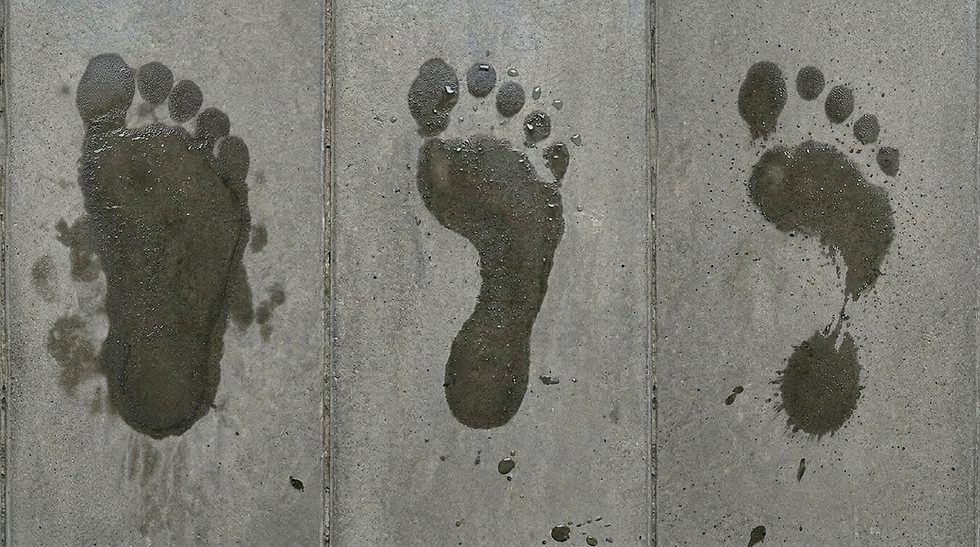
Footprint Pattern | Description |
Overpronation | Flatter foot print with more contact through the mid-foot area. The arch collapses inward excessively. May increase risk of strain and overuse injuries. |
Neutral Pronation | Balanced footprint shows clear heel, forefoot, and moderate curve along the arch. Indicates healthy, well-distributed pressure. |
Supination | High arch leaves a narrow footprint with minimal contact in the middle. This indicates reduced shock absorption and increased risk of impact related injuries. |
Method 2: Shoe Sole Wear Pattern
Another way to identify your foot type is by examining how the sole of your shoes wears down.

Wear Pattern | Description |
Overpronation | The heel strike point tends to be further toward the outer rear of the shoe than normal, while wear during push-off is concentrated on the inner forefoot. |
Neutral Pronation | This is a normal wear pattern. It indicates balanced pronation with even pressure distribution from heel strike to toe-off. |
Supination | Common among runners with high, rigid arches. The heel strikes first, then the foot rolls along the outer edge of the sole. During landing and push-off, weight remains along the outer side of the foot. |
Health Starts from the Feet
True good health begins from the ground up. Your feet are the foundation of every step, every movement, and every moment you spend standing walking or exercising. Taking care of them starts with understanding your unique foot type.

As you learn more about how your feet function, you can make smarter choices like selecting footwear that matches your needs and demands of your daily activities. But for many people, well-designed shoes may not provide enough personalized support.
This is where custom insoles come in! Roam custom insoles are designed to match the exact shape and biomechanics of your feet and provide targeted support. They help guide your foot into a more natural alignment, reducing excessive overpronation or supination. This helps improves comfort and also helps distribute pressure more evenly across the foot.

Rather than treating discomfort after it appears, start supporting your feet proactively and prevent problems before they start. Your body relies on your feet more than you may realize, so investing in proper support is a great way to buil towards a stronger, more stable foundation for long-term health


Comments